
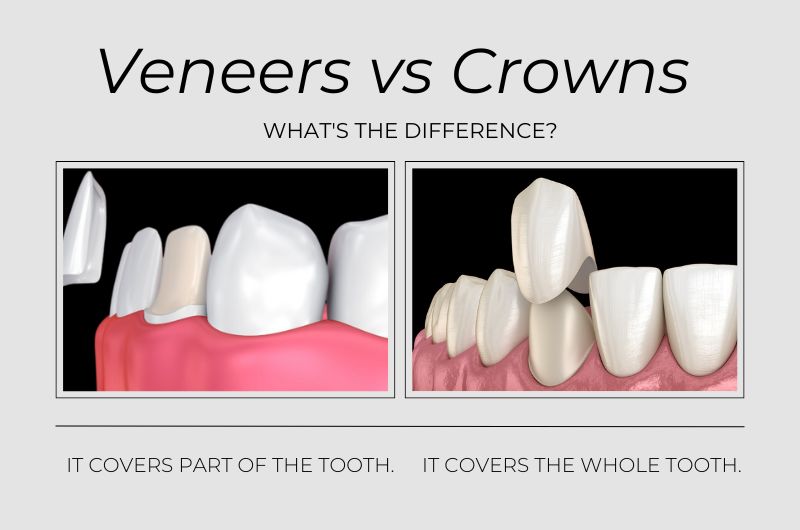
When it comes to improving your smile and restoring damaged teeth, modern dentistry offers several effective solutions. Two of the most commonly recommended treatments are dental crowns and dental veneers. While both aim to enhance appearance and function, they serve different purposes and are suitable for different dental conditions. Understanding the dental crown vs veneer debate can help you make an informed decision about your oral health.
In this blog, we’ll explore the difference between dental crown and veneer, their materials, benefits, drawbacks, and when each option is recommended.
What is a Dental Crown?
A dental crown is a tooth-shaped cap placed over a damaged, weak, or heavily restored tooth. It covers the entire visible portion of the tooth above the gum line, restoring its shape, strength, and function.
Common Reasons for Getting a Dental Crown
- Severely decayed teeth
- Cracked or broken teeth
- Teeth weakened after root canal treatment
- Large fillings that compromise tooth structure
- Dental implant restorations
Crowns are designed to withstand strong biting forces, making them ideal for back teeth and molars that handle heavy chewing.
What are Dental Veneers?
Dental veneers are thin, custom-made shells that are bonded to the front surface of the teeth. They are primarily used for cosmetic improvements rather than structural reinforcement.
Common Reasons for Getting Veneers
- Discolored or stained teeth
- Minor chips or cracks
- Gaps between teeth
- Slightly misaligned or uneven teeth
- Worn-down enamel
Veneers are popular among patients seeking a quick smile makeover with minimal tooth alteration.
Dental Crown vs Veneer: Key Differences
Understanding the difference between dental crown and veneer starts with how much of the tooth each treatment covers and their intended purpose.
1. Coverage
- Dental Crown: Covers the entire tooth
- Dental Veneer: Covers only the front surface
2. Purpose
- Crown: Restores strength, function, and appearance
- Veneer: Enhances aesthetics with minimal functional restoration
3. Tooth Preparation
- Crown: Requires significant reshaping of the tooth
- Veneer: Requires minimal enamel removal
4. Durability
- Crown: Extremely durable and long-lasting
- Veneer: Durable but not as strong as crowns
5. Cost
- Crown: Generally more expensive due to extensive work
- Veneer: Slightly less expensive but varies by material
Materials Used for Dental Crowns
Patients often ask, what are dental implant crowns made of, and the same materials are also used for tooth-supported crowns.
Common Dental Crown Materials
1. Porcelain or Ceramic
- Natural-looking and aesthetically pleasing
- Ideal for front teeth
2. Porcelain-Fused-to-Metal (PFM)
- Strong metal core with porcelain exterior
- Combines durability and aesthetics
3. Zirconia
- Extremely strong and biocompatible
- Excellent for both front and back teeth
4. Metal (Gold or Alloys)
- Highly durable
- Less common due to metallic appearance
When it comes to dental implant crowns, zirconia and porcelain are among the most popular choices due to their strength and natural appearance.
Materials Used for Dental Veneers
Dental veneers are usually made from:
1. Porcelain Veneers
- Highly stain-resistant
- Natural enamel-like appearance
- Long lifespan
2. Composite Resin Veneers
- More affordable
- Faster procedure
- Slightly less durable than porcelain
The choice depends on aesthetic goals, budget, and oral health condition.
Pros and Cons of Dental Crowns
Pros
- Strong and durable
- Restores severely damaged teeth
- Long lifespan (10–15 years or more)
Cons
- More invasive procedure
- Requires more tooth reduction
- Higher cost
Pros and Cons of Dental Veneers
Pros
- Minimally invasive
- Excellent cosmetic results
- Quick smile enhancement
Cons
- Not suitable for severely damaged teeth
- Can chip or crack under pressure
- Less durable than crowns
Which one is Right for You?
Choosing between a dental crown and a veneer depends on your specific dental needs:
- If your tooth is weak, cracked, or heavily restored, a dental crown is usually the better option.
- If your concern is purely cosmetic, such as discoloration or minor imperfections, veneers may be ideal.
A thorough dental examination, including X-rays and bite analysis, is essential before making a decision.
Conclusion
Understanding the dental crown vs veneer comparison and the difference between dental crown and veneer helps patients choose the right treatment for both function and aesthetics. Knowing what are dental implant crowns made of also allows you to select durable, long-lasting materials that suit your smile and lifestyle.
If you’re considering crowns or veneers and want expert guidance tailored to your needs, consulting an experienced dentist in Lahore can ensure the best possible results for your oral health and confidence.